How Do People Discover New Music? 12 Ways to Reach New Listeners
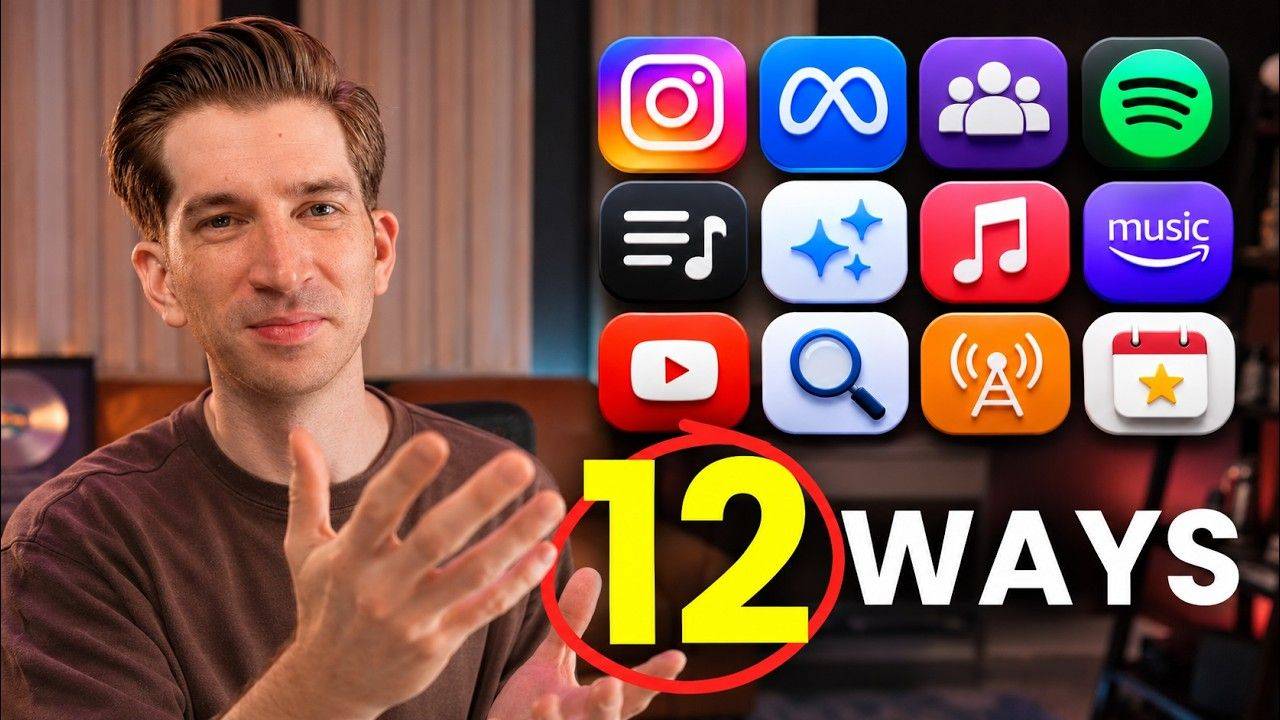
People discover new music through social posts, ads, other creators, streaming playlists and recommendations, websites, live shows, sync placements, and the fans already wearing an artist's merch.
That gives you more options than trying to make every Instagram post go viral. The useful question is: which of those options fits your music, your time, and the audience you want to reach?
I've grouped twelve discovery methods into four areas: social media, streaming platforms, the broader web, and experiences beyond the feed. You don't need to tackle all twelve at once. Use this list to choose where your next listener is likely to find you, then make it easy for them to keep listening.
Watch my twelve music discovery methods on YouTube.
Social media: reach people beyond your current followers
1. Organic posting
Organic posting is what you're doing when you upload a performance clip, share a band photo, or post something from your daily life without paying to distribute it.
The opportunity is to reach people who don't know you yet. The challenge is making something that catches their attention while giving them a reason to care about your music.
A clever hook can get someone to stop scrolling. But if the post has almost nothing to do with the song or the artist behind it, what happens next?
Try a format that gives the music a real role: a performance, the story behind a lyric, or a moment from making the record. Judge the response by whether people become interested in your music, not just whether they watched the clip.
2. Paid social ads
Paid ads let you put a budget behind a piece of content rather than relying entirely on organic distribution.
You're still competing for attention. Paying to deliver a video doesn't automatically make the video interesting, and an impression doesn't mean someone became a listener.
Before spending more, look at the creative. Does the opening give the right person a reason to stop? Can they hear enough of the song to decide whether they like it? Is the next step clear?
I'd rather see you learn from a focused test than keep spending behind a video that people scroll past.
3. Creator and artist collaborations
You can collaborate on posting even when you're not collaborating on songwriting.
A shared performance, interview, or co-created video introduces you to people who already pay attention to the other creator. That gives someone else a role in your discovery instead of leaving every introduction to your own account.
Choose a collaborator whose audience has a reason to connect with your music. A larger audience can help, but the collaboration still needs to make sense to the people watching it.
Streaming platforms: get discovered where people already listen
Streaming services are also called digital service providers, or DSPs. Spotify, Apple Music, and Amazon Music are examples. Their discovery features differ; Spotify is the example here, not a promise that every platform works the same way.
4. Listener and curator playlists
A playlist can introduce your song while someone is already in the mood to hear music.
You can build and promote your own playlist, or pursue relevant playlists that already have listeners. Think about the context: would your song make sense beside the other tracks? Is this a listening experience your future fans would choose?
An introduction on one playlist can also lead a listener to save the song or add it to a personal playlist. That's a useful next step to watch for, rather than treating the stream count as the whole result.
5. Personalized recommendations
Recommendation features help listeners encounter music selected for them. Release Radar, for example, includes new music from artists a listener follows, artists they listen to, and other artists Spotify thinks they'll like, according to Spotify's Release Radar guidance.
For your own planning, focus on reaching people who genuinely enjoy your songs. Don't build a budget around the assumption that a particular number of streams will unlock an automatic wave of recommendations.
Look at where listeners come from and what they do after finding you. Keep giving interested listeners a reason to return to your catalog.
6. Editorial playlists
Editorial playlists are selected by the platform's editors. For Spotify, you can submit an upcoming, unreleased song through Spotify for Artists.
Make this part of your release preparation. Spotify says to deliver music at least seven days before release so editors have time to listen. Pitching does not guarantee placement.
There is also a useful distinction around Release Radar: submitting a pitch at least seven days before release lets you choose the song for your followers' Release Radar. Pitching is not the only way a release can appear there. Spotify says that if you don't pitch, it chooses which songs from your release to include.
Check the current Spotify editorial pitching instructions before your next release.
7. Streaming-platform advertising
Advertising within a streaming service is another way to put your music in front of listeners.
In my own tests, Spotify ads were more expensive than the other approaches I was comparing. That's why they wouldn't be my first choice for every independent artist. Your campaign could be different, so compare the results rather than assuming that advertising inside a music app must be the best value.
Decide what outcome matters before running a test. Then compare the cost of that outcome with your other promotion options.
The broader web: make yourself easier to find again
8. Music blogs and digital magazines
A feature gives someone a place to read about you, hear your story, and follow a link to your music.
Before pursuing coverage, ask how the publication reaches its readers. Does it have an engaged audience? Does it send features to an email list? Will the article link people to somewhere useful?
I especially like looking beyond the article itself to its distribution. A feature that gets sent to interested subscribers has a different opportunity than a page nobody is told about.
You can also share the feature with your own audience. Give them a reason to read it, such as a story about the song they haven't heard yet.
9. Your artist website and search visibility
At some point, someone who hears you elsewhere may type your name into a search engine. Give them a clear place to land.
Start with your artist name, music, a useful bio, current links, and an obvious way to stay connected. If another site covers you, ask for a relevant link to your official website so readers can find you.
Search engine optimization, or SEO, means helping search engines understand your content and helping people find it. Google's SEO Starter Guide explains that links can help Google discover pages, but no technique automatically guarantees a first-place ranking.
Build a useful site now rather than waiting until you have a larger audience. Keep it current so a new listener doesn't arrive at an outdated release page or a dead end.
Beyond the feed: give people an experience and something to share
10. Live concerts
A show lets someone spend meaningful time with your music. You're sharing the room, the sound, and the performance instead of asking them to stop for a few seconds in a feed.
Opening for another act can introduce you to its audience. Building your own show gives you another opportunity to bring people into that experience.
I think about this in terms of immersion: the more someone gets to experience the world around your music, the more opportunity they have to connect with it.
Make the next step easy while that interest is fresh. Let people know how to find your music, stay in touch, or take something home from the show.
11. Sync placements
Sync licensing is when music is licensed for use alongside visual media, such as a television show, film, or advertisement.
That can put a song in front of people who weren't searching for the artist. They're engaged in a scene or story, and the music becomes part of that experience.
It's also a separate area of the music business with its own learning curve. Don't treat a placement as guaranteed income or guaranteed fan growth. Start by understanding the process and getting your song information organized.
And remember the connection to your website: if a viewer looks you up after hearing your song, make sure they can find the right artist.
12. Merch and fan recommendations
When someone wears your shirt, your artist identity travels into places you haven't reached yourself. It can become a conversation starter between your fan and someone who has never heard your music.
When I work with artists in my community, I remind them to think about what happens after the show. Merch gives people something to take home and keep using.
That doesn't mean every item needs to be sold at break-even. You still need to understand your costs. But when you're deciding what to offer, consider both the sale and the opportunity for a fan to share their enthusiasm.
Make something people actually want to wear.
Choose one discovery method and plan the next step
Start with the resources you already have.
- If you're comfortable making videos, test a music-led content format or a relevant collaboration.
- If you're preparing a release, build editorial pitching into the schedule.
- If you're playing shows, make it easy for the people in the room to find you afterward.
- If people are already hearing about you, check what they find when they search your artist name.
Then choose a next step you can observe: listening to the song, saving it, joining your email list, or coming to another show. Keep your test small enough that you can understand what worked.
Discovery creates the introduction. Give that new listener somewhere worthwhile to go.
Questions artists ask about music discovery
Can I promote my music without posting on social media every day?
Yes. Relevant playlists, live performances, publication coverage, and sync opportunities are other routes to discovery. Choose a route you can realistically pursue, then give interested listeners a clear way to find more of your music.
How should I decide between spending time and spending money?
Start with what you can sustain. Organic content and collaborations require your time; paid promotion also requires a budget and a way to judge the result. Pick a manageable test rather than trying every channel at once.
What should I look for before pursuing a blog feature?
Look for audience fit and a clear distribution plan. Ask who reads the publication, whether features reach its subscribers, and where readers will be directed after reading about you.
What should I measure after someone discovers my song?
Choose a meaningful next action before you start: a save, another listen, an email signup, or a show visit. A large reach number can tell you that people were exposed to something; it doesn't tell you on its own whether they wanted more.