Case Study: Building a Music Marketing System That Compounds: Rip Gerber
Meet the Artist
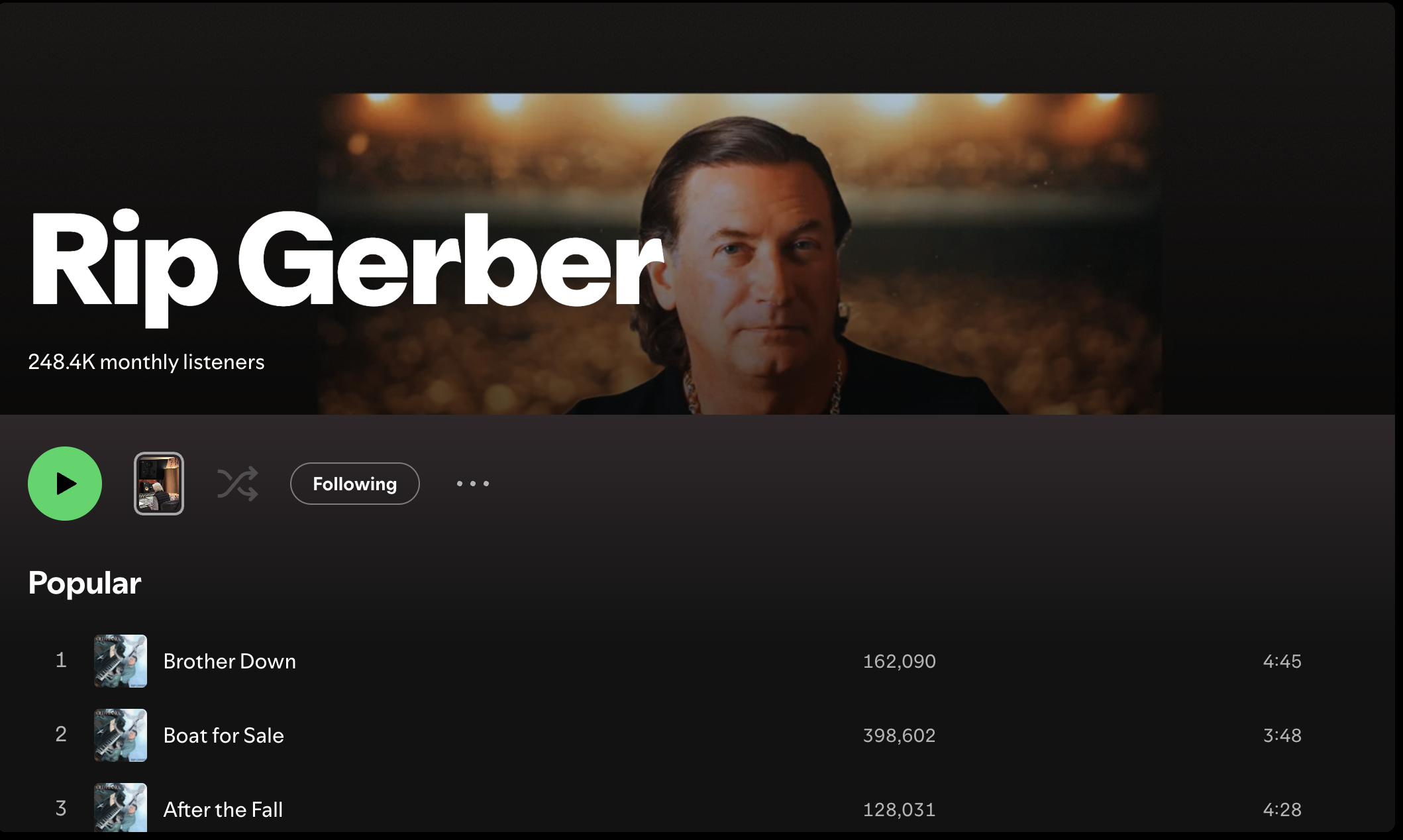
Rip Gerber is an independent artist whose music blends heartfelt storytelling with classic American influences. Rather than chasing one viral moment, Rip focused on consistently releasing meaningful music while building a sustainable music career.
Rip Gerber also spent his career as a marketing executive in the technology industry. He understood funnels, attribution, lifecycle marketing, and digital advertising. But when he began releasing his own music, he discovered something surprising:
“Knowing the theory and running it yourself at 11 p.m. on a Tuesday are two very different things.”
— Rip Gerber
Like many musicians, he understood that great songs alone weren't enough. Every new release needed an audience—and he wanted each campaign to build on the last instead of constantly starting over.
The Challenge
Despite years of marketing experience, Rip found indie music promotion uniquely taunting. Unlike the corporate world, there was no established roadmap. Every day presented another marketing decision, another platform, another strategy, and another expense.
The biggest challenge was never knowing whether the marketing was actually working.
“The hardest part about promoting your own music is not knowing if you're doing it right.”
Many artists pour months into recording a song, only to watch the excitement disappear after a few weeks. The next release often begins from zero again. Instead of treating every song as its own isolated promotion, Rip wanted a system that would continuously grow his audience over time.
The goal wasn't simply overnight streams. It was to build a lasting fanbase and create a marketing foundation that would support every future release.
Why More Streams Don't Always Mean More Fans
Coming from tech marketing, Rip expected to have music marketing nailed down. But promoting his own music exposed a different challenge: knowing marketing theory and knowing which tactics will actually turn listeners into fans are two very different things.
The digital advertising landscape was changing, too. As Meta rolled out its Andromeda ad retrieval system, older approaches built heavily around detailed interest targeting and tightly stacked audiences became less central. Creative, audience signals, and campaign structure became increasingly important.
For Rip, simply posting content, boosting what appeared to perform, and chasing the next spike wasn't enough.
“I was running a playbook that no longer described the game. The usual indie playbook: post a lot, boost the ones that seemed to be working, hope something catches. It produced numbers. It did not produce fans. ”
— Rip Gerber
Views, streams, and impressions can show that people encountered your music, but sustainable growth comes from turning that attention into an audience you can reach again.
A one-off campaign might generate a temporary increase in activity. But if the next release requires finding an entirely new audience, much of that momentum has to be rebuilt.
Instead, a repeatable music marketing system should help each campaign strengthen assets that carry forward:
- Spotify followers
- Email subscribers
- Returning listeners
- Artist profile engagement
- Saves and playlist adds
- Direct relationships with fans
That's the approach IMA began building with Rip: not simply promoting individual songs, but creating an audience-development system where each campaign could compound on the work that came before it.
Why Rip Chose IMA
Rip wasn't looking for another marketing shortcut. He was looking for infrastructure. Rip was drawn to IMA because his first real conversation with Ryan consisted of pixel setup, audience architecture, fan nurturing and more—the deeply unglamorous work that he knew was necessary for lasting results.
Rather than taking over Rip's creative process, Indie Music Academy focused on the technical systems behind audience growth while allowing Rip to remain fully in control of his artistry.
“Ryan Waczek is the best teacher for indies in the music industry today.” — Rip Gerber
The Strategy
Rip wasn't looking for someone to take over his artistry. He was already writing his emails, creating his videos, choosing his visuals, and shaping his own brand.
What he needed was the technical marketing infrastructure behind it.
Instead of relying on one-off promotions every release, IMA worked with Rip to build a sustaining multi-channel system where Spotify playlist promotion, Meta advertising, and email acquisition could work together and build momentum with every new release.
Spotify Playlist Promotion
Reach real listeners already using Spotify to discover and consume music.
Meta Advertising
Introduce Rip's music to new audiences and learn which songs and creative resonate most.
Email Acquisition
Turn interested listeners into subscribers Rip can reach directly with every future release.
Reaching Listeners Already Discovering Music on Spotify
Playlist promotion gave Rip a source of traffic generation inside Spotify itself.
Across multiple releases, Rip used IMA's 100% Organic Spotify Playlist Promotion and Release Day Playlist Promotion campaigns to place his music in front of real listeners already using Spotify to discover and consume music.
IMA's approach uses vetted, influencer-owned playlists rather than owning the playlists directly, with placements designed to reach real Spotify users and avoid artificial streaming or bot-driven activity. That distinction was especially important to Rip.
“Bot traffic doesn't buy vinyl. It doesn't show up to a show. You're renting a number, and the rent comes due.”
— Rip Gerber
IMA's playlist promotion allowed Rip to pursue real discovery from listeners already in the environment where he wanted them to engage.
Using Meta Ads to Generate Traffic
Rather than chasing views or boosting posts, IMA used targeted Meta campaigns to introduce Rip's music to listeners likely to connect with his sound.
The goal wasn't simply to generate another click. It was to build another source of traffic generation and move the right listeners toward his Spotify. Through the ads we were able to learn which songs and creative resonated most, and use that data to continually improve the campaign.
Turning Listeners Into an Audience Rip Owns
But Spotify was only one part of the system. IMA also helped Rip develop fan magnets and email acquisition campaigns designed to turn interested listeners into subscribers he could reach directly.
“Email cultivation changed the fundamental relationship from renting to owning.”
Social platforms and streaming services control when—and whether—an artist reaches their audience. An email list creates a direct relationship that can carry from one release to the next.
“My email list is the one audience nobody can take away, throttle, or charge me more for.”
— Rip Gerber
When Old Piano was released, that infrastructure meant Rip could tell more than 10,000 fans directly—without depending on an algorithm to decide who saw the announcement.
Building a System That Gets Stronger With Every Release
Meta Ads created discovery. Spotify turned discovery into listening behavior. Fan magnets captured interested listeners. Email created a direct relationship. And every new release gave the system another opportunity to grow.
Instead of starting over every time Rip released a song, the goal was to make each campaign contribute something to the next one.
IMA provided the technical infrastructure and optimization while Rip remained in control of the creative relationship with his fans. The result wasn't simply a campaign that performed—it was a marketing system Rip could continue building on.
The Results: The Road to 200,000 Monthly Listeners
The goal of Rip's strategy wasn't to manufacture one big streaming spike. It was to continually increase the number of people discovering his music, returning to his catalog, and following along with each new release.
Each campaign added another layer of discovery through Meta Ads, playlist promotion, email, and new releases. Eventually, that momentum helped Rip cross one of his biggest milestones yet:
Where Rip Started
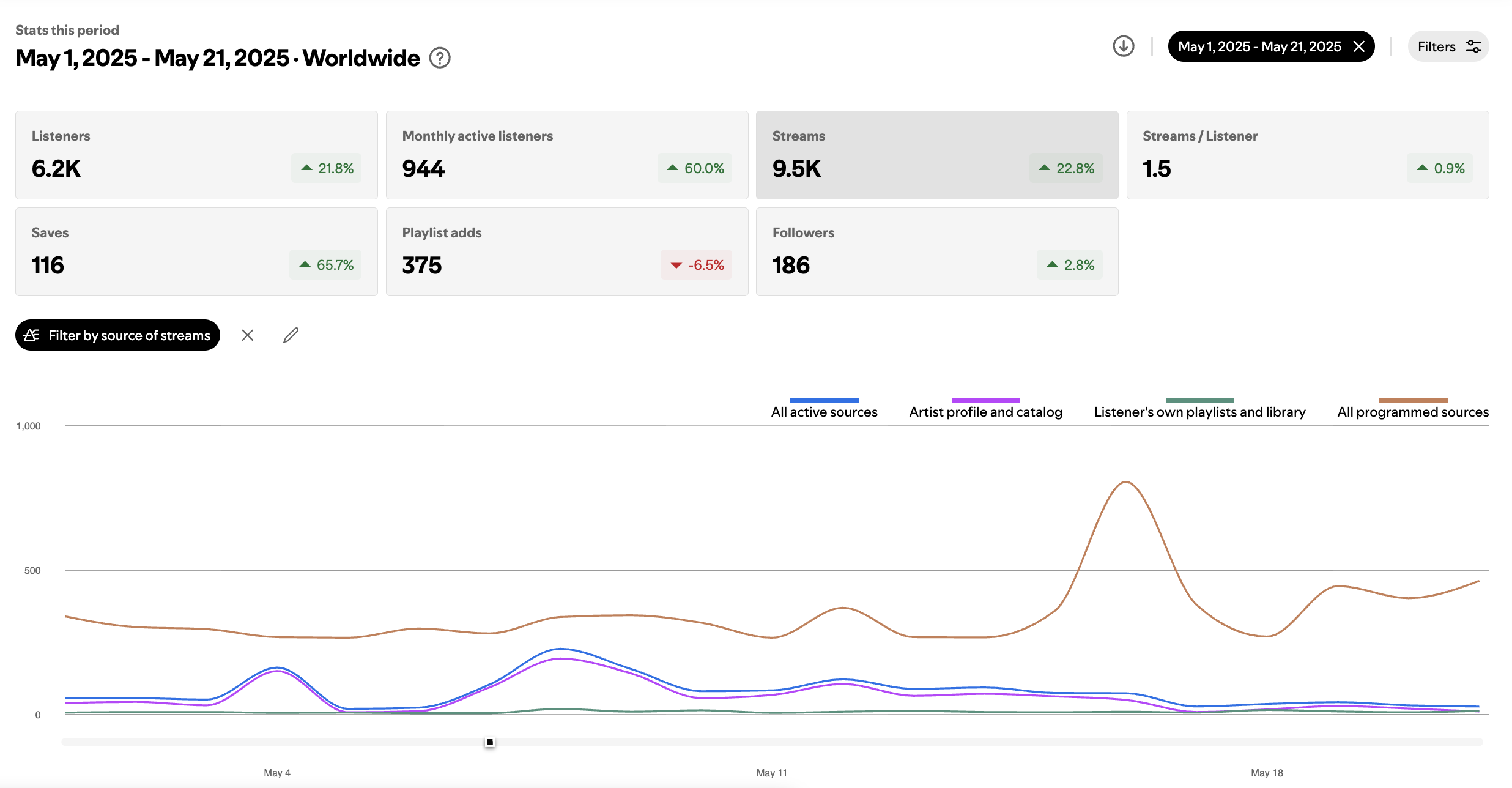
Before launching IMA's growth campaigns in May, Rip had begun establishing an audience on Spotify, but engagement was still relatively modest and inconsistent. From May 1–21, he reached 6,200 listeners and 9,500 streams, with just 944 monthly active listeners. His music generated 116 saves and 375 playlist adds.
The First Term: Building the Foundation
During Rip's first term with IMA in June of 2025, we launched Meta campaigns to begin introducing his music to new audiences while simultaneously building an email list and gathering data around the songs, creatives, and audiences responding most strongly. As the campaigns optimized, Rip's Spotify cost per result fell from $0.59 to as low as $0.32.
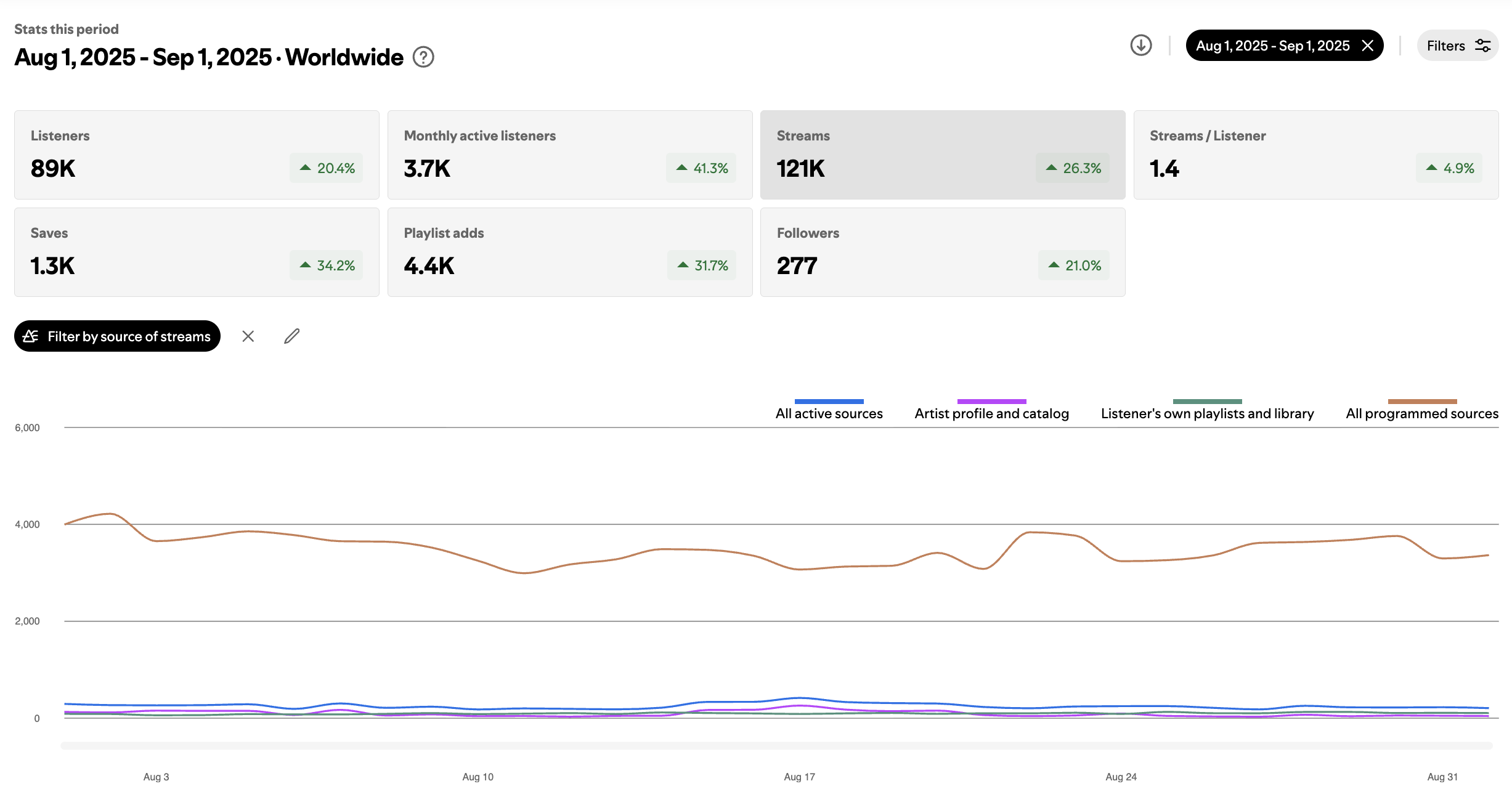
By August 2025, Spotify recorded:
The Second Term: Growth Accelerates Again
Even after several months of pausing his campaigns, Rip returned to IMA in spring 2026 to find the catalog, audience data, email infrastructure, and lessons from the first term were still there and sustaining.
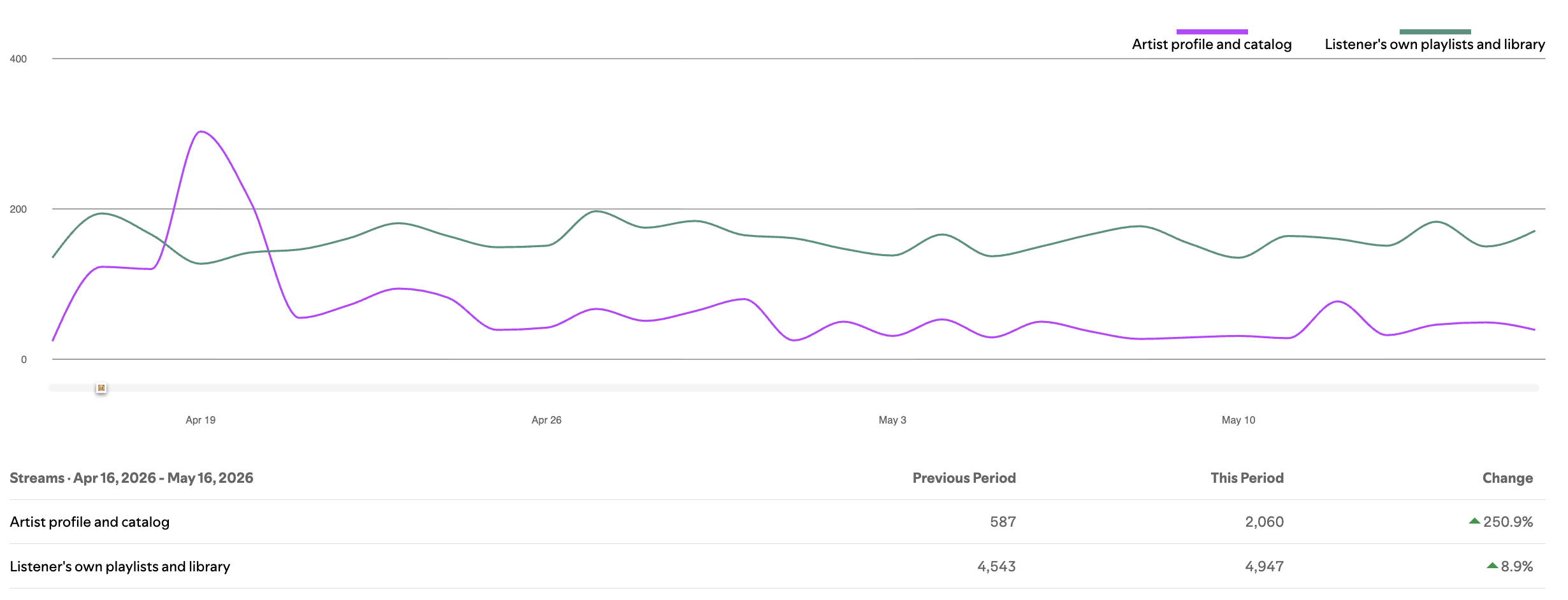
When Spotify Growth campaigns relaunched in April, the audience began accelerating again. During the first reporting period back, Artist Profile & Catalog streams increased from 587 to 2,060—a 250.9% jump.
By the next reporting period in May, Rip had reached approximately 80,000 listeners, and 118,000 streams.
Streams from listeners' own playlists and libraries were consistently exceeding streams coming directly from his Artist Profile & Catalog. This meant that people weren't simply encountering Rip's music through promotion. They were saving it and bringing it into their own Spotify listening habits.
Then Came the Biggest Jump
During the July 16–August 16 reporting period, Rip's Spotify for Artists dashboard recorded approximately:

But one of the most revealing metrics was happening underneath those headline numbers.
Before working with IMA in May, Rip's Artist Profile & Catalog was generating roughly 70 streams per day. By August, that number grew to about 110 streams per day and eventually, by August 2026, reached approximately 375 streams per day.
That's roughly a 5X increase in Rip's daily Artist Profile & Catalog baseline from where the period began.
That's the progression we were looking for. Each release was feeding a larger ecosystem than the one before it.
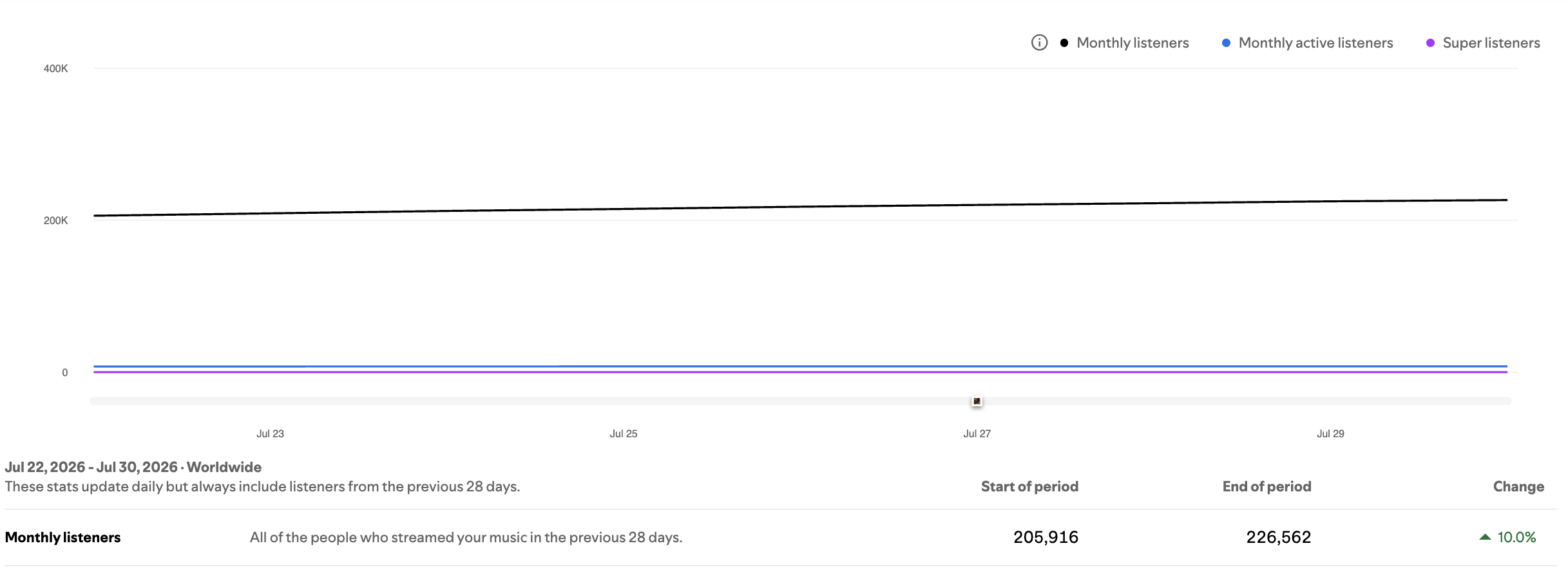
Eventually in July of 2026, that compounding growth helped Rip surpass 200,000 monthly Spotify listeners and 2.7+ million total streams—milestones he specifically credits to active fan cultivation through organic advertising and email marketing.
“Working with Ryan Waczek and the IMA team on active fan cultivation, my music has passed one million streams and over 200,000 monthly listeners — every one of those built through real advertising and real email.”
— Rip Gerber
That's what makes 200,000 monthly listeners meaningful in this story.
It wasn't one viral moment. It was the cumulative result of continually giving real people more ways to discover Rip, connect with his music, and come back for the next release.
Rip's Spotify Monthly Listeners increased by approximately 3,300%, while average daily listeners grew from roughly 300 per day to about 10,000 per day, landing him at a current 200K monthly listeners on Spotify.
The campaigns also generated:
- 4360+ new email subscribers
- 11,300+ website visits to Spotify
- Rather than creating a short-lived spike, the campaigns helped establish a larger audience that Rip could continue reaching with every future release.
Key Takeaways
- The goal isn't just to make one song successful, but to build a marketing system that makes every future release stronger than the last.
- Instead of relying on temporary bursts of attention, sustainable artist growth focuses on followers, subscribers, engaged listeners, and repeat fans.
- Spotify playlist promotion, Meta Ads, and email acquisition can work together rather than functioning as isolated tactics.
- An owned email audience gives artists a direct relationship with fans outside platform algorithms.
- When each campaign builds on the previous one, momentum can compound over time.
Build a Music Marketing System That Grows With Every Release
Rip's story shows what can happen when music promotion stops being a collection of one-off tactics and becomes a connected audience-development system. The goal isn't simply more streams today—it's building listeners, followers, subscribers, and repeat fans you can carry into the next release.
Learn MoreMusic Marketing & Spotify Growth FAQ
How do independent artists build a long-term fanbase?
The most sustainable approach combines consistent music releases with audience-building strategies such as Spotify growth campaigns, email list growth, and ongoing fan engagement. This creates assets that continue supporting future releases.
Why should musicians build an email list?
An email list gives artists direct access to their fans without relying on platform algorithms. It allows you to announce new releases, tours, merchandise, and exclusive content to people who have already shown interest in your music.
What metrics matter most for long-term growth?
Beyond streams, artists should pay attention to Spotify followers, saves, playlist adds, returning listeners, email subscribers, and artist profile engagement. These metrics often indicate whether your audience is growing sustainably.